Zambia is pivoting a $491 million U.S.-backed agricultural grant to bolster infrastructure for its surging critical minerals sector, a move that highlights the African nation’s ambition to cement its role in the global clean-energy supply chain.
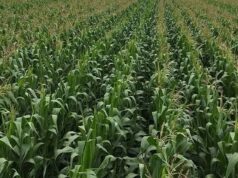
The Lusaka government reached an agreement with the Millennium Challenge Corporation (MCC), a U.S. government development agency, to realign portions of the “farm-to-market” pact originally signed in 2024. While the funding was initially intended to boost farming productivity, a portion will now be funneled into infrastructure tied to the Lobito Corridor a Washington-backed transport artery designed to counter Chinese dominance over Africa’s resources.
The corridor connects the mineral-rich heartlands of Zambia and the Democratic Republic of Congo to Angola’s Atlantic port of Lobito. The route has quickly become a focal point for Western geopolitical strategy, attracting more than $6 billion in global commitments as the U.S. and Europe scramble for secure access to copper and cobalt needed for electric vehicles and renewable energy grids.
“The revised program represents a dual-track economic strategy,” Zambia’s Ministry of Finance said in a statement. “By upgrading road networks across the Copperbelt and North-Western provinces, we are simultaneously unlocking agricultural potential and removing logistics bottlenecks for our primary export engine.”
Zambia, Africa’s second-largest copper producer, is seeking to link its historic Copperbelt mining hub directly to the Lobito network via a new railway expansion led by the Africa Finance Corporation. The AFC has indicated it targets financial close for the rail project by the fourth quarter of 2027.
For Washington, the grant realignment underscores a pragmatic approach to development aid, mixing traditional economic support with immediate supply-chain security.
“Infrastructure in these key regions serves a multiplier effect,” a spokesperson for the development initiative noted, speaking on the condition of anonymity. “A road that allows a local farmer to get crops to market smoother is the exact same road that ensures a truckload of copper moves toward the coast without delay. It is about building resilience into the entire economic corridor.”
As competition for transition metals intensifies between Western powers and Beijing, Zambia’s strategic realignment places it at the center of an emerging African trade and logistics network, transforming a standard development grant into a tool of global energy diplomacy.