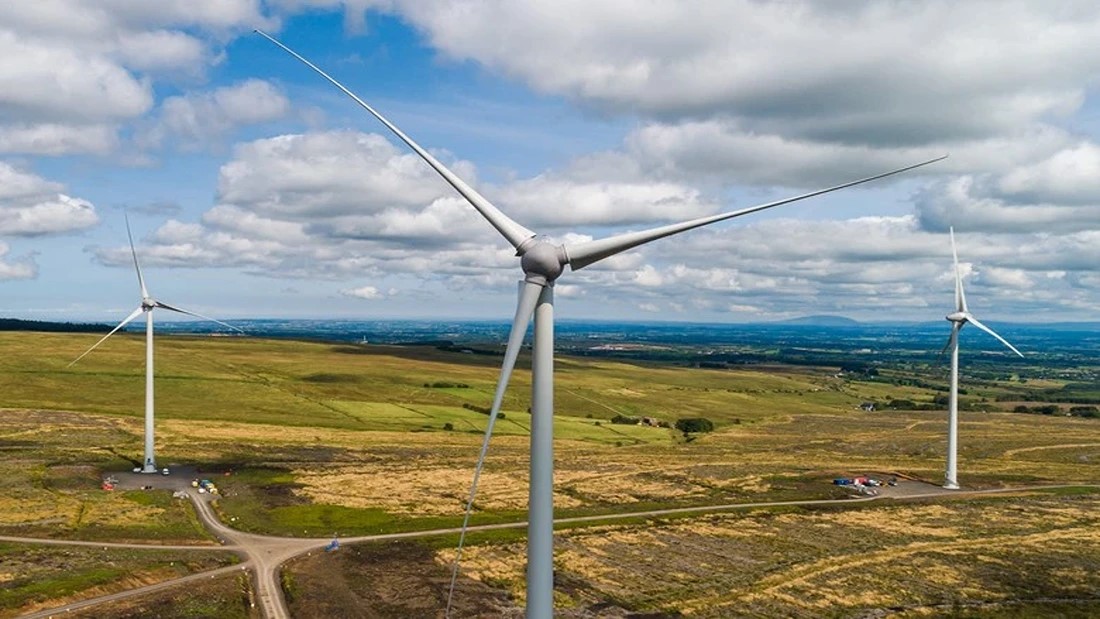
Zambia’s widening power needs are creating a strategic opening for renewable energy developers, with Sturdee Energy positioning a 200 MW wind project in the Copperbelt as the foundation of its entry into the market. The Masaiti Wind Project in Mpongwe District is advancing towards financial close with direct access to a ZESCO 330 kV transmission line, placing the development close to major industrial and mining demand while giving Sturdee potential access to the wider Southern African Power Pool.
The project marks the Southern African independent power producer’s entry into its fifth SADC market and builds on its existing 280 MW renewable energy portfolio across the region. Sturdee is acquiring Masaiti from Upepo Holdings through its Zambian development company, Upepo Energy Zambia, which has taken the project through significant development work. More than six years of on-site wind measurements have been collected through meteorological masts, providing an established data set on the site’s wind resource as the project moves towards financial close.
Its location strengthens the investment case. The Copperbelt remains one of Zambia’s most energy-intensive economic regions, with mining, mineral processing and manufacturing driving substantial electricity demand. At the same time, the government is targeting a major expansion in copper production while seeking to increase national generation capacity to about 10 GW by 2030. Masaiti gives Sturdee an opportunity to add renewable generation close to this concentration of industrial electricity users while establishing a potential route into regional power markets through the Southern African Power Pool.
The company plans to take full ownership of Masaiti at the start of construction and develop an offtake structure initially involving ZESCO, alongside potential routes through SAPP markets, local electricity traders and domestic and international bilateral contracts. Sturdee is also developing solar PV and battery energy storage alongside the wind project, with the aim of creating a more consistent renewable power profile across 24 hours. The company intends to offer the combined supply under a single tariff and power purchase agreement.
The model reflects Sturdee’s broader strategy of combining renewable technologies with flexible routes to market, allowing generation capacity to be matched more closely with the requirements of utilities, mining companies and other commercial and industrial users. Potential structures could also include contracts for difference for commercial and industrial customers seeking to secure renewable electricity.
Sturdee Energy Co-Chief Executive Officer James White said the Masaiti acquisition provides the company with a platform to establish a broader presence in Zambia and the regional market. “The acquisition of the Masaiti Wind Farm puts us in a position to enter an incredibly important market, with not just talk, but action. The Masaiti Wind Farm is only the tip of the spear where we intend to expand rapidly to answer the call for 24 hour renewable energy in SADC, delivered to our customers on their terms,” said White.
Co-CEO Andrew Johnson said the project’s scale and location would support access to both Zambian and regional electricity markets. He noted, “Scale and location are what make low-cost renewable power possible, and Masaiti ticks both boxes. This 200 megawatt project gives us a genuine platform to supply not just Zambia but the wider Southern African Power Pool and it brings real, lasting value to the Zambian economy along the way.”
For Upepo Energy, the partnership brings additional technical, financial and development capacity as Masaiti moves through its remaining stages. “Every successful wind energy project requires creating successful partnerships with communities, utilities, builders and financial institutions. Our partnership with Sturdee brings world-class technical, financial and development expertise needed to bring this project to fruition,” concluded Thomas Carnahan, President of Upepo Energy.
Masaiti is now in late-stage development, with Sturdee focused on completing the work required to reach financial close and ultimately move the project into construction. The investment comes as Zambia seeks to align electricity expansion with its ambitions to grow copper production, strengthen energy security and deepen regional power integration. For Sturdee, Masaiti offers an initial foothold from which to build a wider renewable energy presence in Zambia while developing routes into the SAPP market.
The project’s established wind resource, transmission connection and proximity to major industrial demand provide a strong foundation for that strategy. The planned combination of wind, solar and battery storage could further position Masaiti as a flexible renewable power platform for an economy where reliable electricity will increasingly determine the pace of industrial and mining growth.