For Nawa Lubinda, the Zambezi River has always been both home and livelihood. But standing in his canoe casting nets into waters that return less with each passing season, he knows that the old way of fishing is running out of time. Lubinda’s story is Zambia’s story in miniature. Overfishing, environmental change, limited access to technology and poor market infrastructure are squeezing shoreline communities across the country, eroding livelihoods that generations have depended upon.
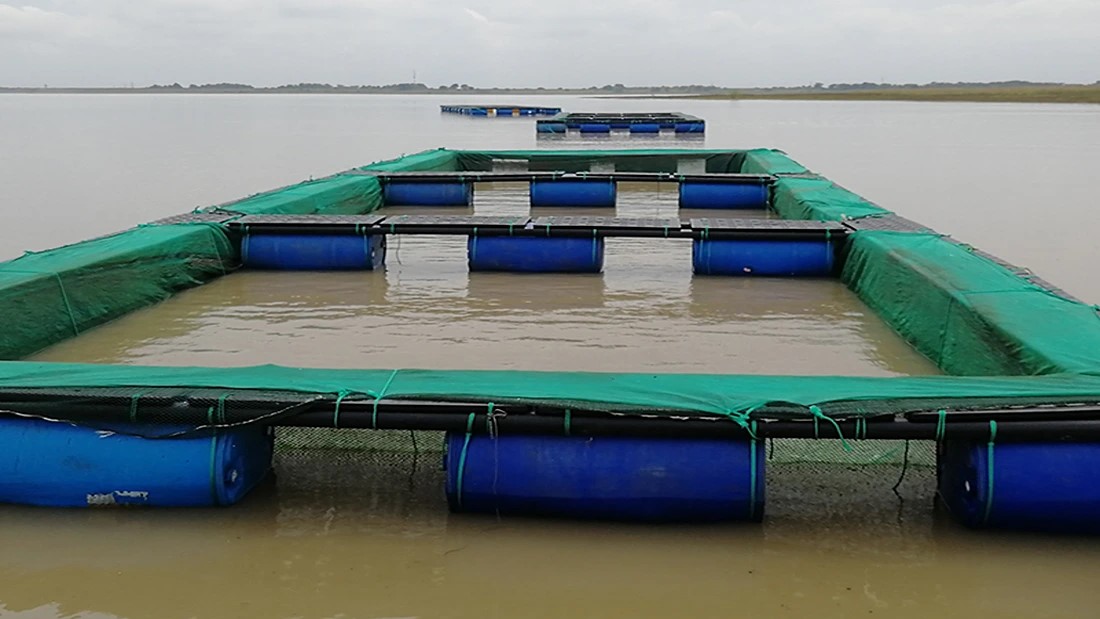
“It’s getting harder from month to month and the earlier we implement sustainable practices that can help conserve fish populations and ensure long-term economic benefits for communities, the better,” revealed Lubinda. A government-backed aquaculture expansion project worth nearly $570,000, launched in November 2025 is designed not merely to fill the gap left by declining wild fish stocks but to offer a fundamentally different economic future to the communities most affected. The project’s most visible expression is in Senanga District, roughly 900 kilometres west of Lusaka, where the Citizen Economic Empowerment Commission, in collaboration with the Ministry of Small and Medium Enterprise Development, has introduced floating fish cages along the Zambezi. Four cooperatives have been equipped with 26 cages capable of holding 156,000 fish in the first production cycle, with the number set to expand to 56 and eventual fingerling production of up to one million.
Supporting infrastructure, a 10-tonne cold room and a 5-tonne refrigerated truck completes a value chain that extends from river to market. Training programmes targeting women and young people run alongside the physical infrastructure, with the explicit aim of building aquaculture entrepreneurs rather than simply fish producers. At the launch, Minister Elias Mubanga captured the intent. “This project goes beyond fish farming. It is about empowerment, employment and transformation for our people, especially in rural areas,” noted Mubanga. The project is designed to generate more than 300 metric tonnes of fish per cycle and create over 800 jobs.
For Lubinda and his fellow fishers, the shift is already becoming tangible. Local markets are beginning to sell what communities call “CEEC fish” and the conversation along the riverbank has changed. “I can really imagine that this is going to be a gamechanger for our livelihood and enhance food security in our district. Eventually, it may lift us out of perpetual poverty,” said Lubinda. Fellow fisher Mukubesa Kalaluka agrees, believing the “socio-economic ripple effect will be felt in the district and beyond”.
The Senanga project is part of a broader national aquaculture push supported by fish breeding centres, cold chain facilities and similar programmes in other provinces with authorities hoping it will serve as a replicable model. For a country where the river has always been a lifeline, aquaculture may be the mechanism through which that lifeline is renewed rather than exhausted.