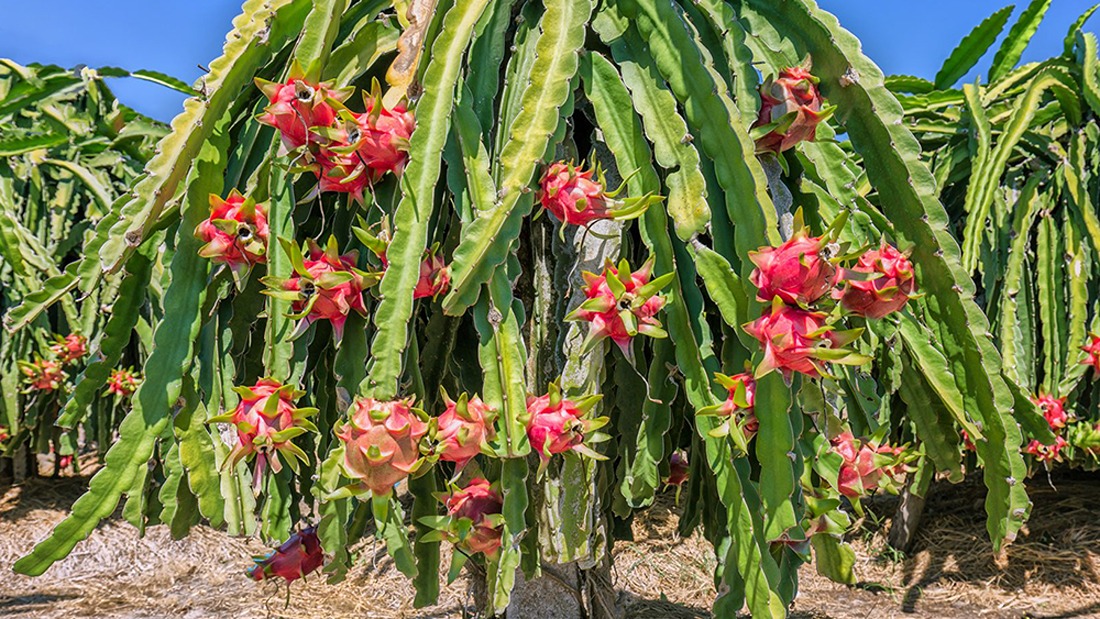
The global dragon fruit market was valued at approximately US$678 million in 2024 and is projected to reach US$995 million by 2030, with a compound annual growth rate of around 7.99%, according to MarkNtel Advisors. In South Africa, however, growers face funding constraints, variable weather, consumer perceptions, and regulatory requirements.
Cornelius Andrias van Heerden from Wonderful Dragon Fruit said the crop performs well under dry, warm conditions, including in Zimbabwe, Botswana, and Zambia. However, he said access to funding is limiting new plantings in South Africa.
Lauren Strever, managing director of Amorentia Estate and Nursery, said expectations around the crop’s suitability for South Africa’s subtropical regions had been too optimistic. While dragon fruit is relatively drought tolerant, prolonged rainfall and humidity can affect flowering, fruit development, and yields.
Market development is another constraint. Strever said older, white, bland-tasting fruit continues to dominate South African retail, while growers are increasingly planting red, pink, and white selections with higher sweetness levels.
“The biggest lesson from the past few years is probably that you cannot plant your way into a market. We need to develop the market alongside the production, and ultimately the consumer is the driver of cultivar and quality selection.”
Growers also face regulatory requirements. Under South Africa’s National Environmental Management: Biodiversity Act Alien and Invasive Species Regulations, Hylocereus undatus, including its hybrids, is classified as a category 2 species. Growers therefore require environmental permits to possess, propagate, or sell the plants.
Strever said these permitting requirements create an additional barrier for growers considering dragon fruit as a diversification crop and called for further South African research into the environmental risk associated with commercial cultivation.
Source: foodformzansi.co.za