The journey from agricultural production to the consumer’s table is often fragmented, with producers, processors, distributors and retailers operating under different commercial pressures. ZamBeef Products PLC has built its business around connecting these stages, creating an integrated food value chain that spans farming, livestock production, processing, manufacturing and retail distribution. The model has positioned the Zambian company as one of the country’s largest agribusinesses, with a diversified portfolio designed to serve households while supporting domestic food production and employment.
For more than 30 years, ZamBeef has played a significant role in Zambia’s food production landscape. Its proposition is built on the availability of quality, affordable and nutritious food, supported by an extensive operating model that links agricultural inputs and primary production to finished products and established routes to market. The company’s portfolio extends across beef, chicken, pork, milk, dairy products, eggs, edible oils, stockfeed, flour and bread. It also operates in leather processing and footwear manufacturing, adding value to cattle by-products through the production of finished leather, shoes and industrial footwear. This breadth allows ZamBeef to participate in several parts of the agricultural economy while serving different consumer needs and market segments.
Its ten brands provide a platform for taking this product range to consumers through its own retail network and Shoprite stores. The business also supplies neighbouring markets, with operations beyond Zambia including Ghana and Nigeria. ZamBeef aims to strengthen its position as an internationally recognised producer of quality, affordable and nutritious food, while contributing to food security, employment and improved livelihoods. At the centre of this proposition is vertical integration. Rather than relying exclusively on external suppliers and independent distribution channels, ZamBeef connects its farming operations with feedlots, processing facilities, manufacturing plants and retail outlets. The model gives the company greater control over the movement of products through the value chain, from agricultural production to the point of sale.
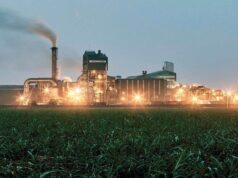
This structure is particularly relevant in markets where transport, storage and cold-chain infrastructure can influence food quality, availability and affordability. By coordinating production, processing and distribution, the company can manage supply more directly, capture value at different stages and reduce its exposure to some of the costs associated with fragmented supply chains. Its agricultural operations include large-scale production of wheat, maize and soya beans, alongside livestock and poultry activities. These crops also support the wider production system, including the manufacture of stockfeed. The use of agricultural outputs and processing by-products across different business activities creates opportunities for resource efficiency and additional value creation. Soya bean processing, for example, generates soya bean cake that can be used in livestock feed, while cattle hides from meat processing provide raw material for leather and footwear production.
This interconnected approach gives ZamBeef a diversified operating base and helps link crop production with the supply of animal protein. It also reinforces the importance of production efficiency, reliable inputs and effective coordination across its businesses. The company’s development reflects a long-term expansion strategy. What began in 1994 as a small beef operation, with 60 employees, a rented abattoir and two rented butcheries, grew through investment, acquisitions and the expansion of its production and distribution capacity. Its relationship with Shoprite dates back to 1995, when it reached an agreement to manage butcheries across Zambia. Subsequent expansion into Nigeria and Ghana, together with acquisitions across agricultural production and processing, broadened its operating footprint and product offering.
ZamBeef’s listing on the Lusaka Securities Exchange in 2003, followed by its dual listing on the Alternative Investment Market of the London Stock Exchange in 2011, marked important stages in its development as a publicly traded African agribusiness. Access to capital has been central to the company’s ability to invest in production capacity, processing infrastructure and distribution. International development finance has also played a role in supporting its expansion. A financing arrangement involving DEG and FMO provided a long-term US$15 million facility for investments in cold-chain food operations, the Zamhatch stockfeed plant, retail outlets, a wholesale depot, farming and distribution. The facility reflected the development-finance institutions’ assessment of ZamBeef’s role in local agricultural production, food processing, employment and its engagement with smaller suppliers. This is a historical investment facility, not an indication of current financing commitments.
Beyond its own production base, the company’s supply-chain relationships extend to small-scale farmers. FMO’s investment disclosure records approximately 3,500 small-scale farmers supplying cattle, chickens, maize and milk to the group, alongside more than 6,000 direct permanent jobs across Zambia, Ghana and Nigeria at the time of that disclosure. These relationships illustrate the wider economic reach of an integrated agribusiness, where commercial production can create market access for smaller producers and support employment across farming, processing, logistics and retail. Community investment is another dimension of the company’s stated commitment to responsible business. Initiatives documented in the development-finance disclosure include the construction of primary schools and health centres to improve access to essential education and healthcare for employees’ families in remote operating areas. Cattle improvement programmes have also been identified as part of its support for small-scale farmers. Such interventions connect the company’s agricultural activities with broader priorities around rural development, livelihoods and community wellbeing.
Maintaining this contribution, however, requires sustained investment and careful management of operational risks. Integrated agribusinesses depend on reliable electricity, transport infrastructure, water, storage and cold-chain systems. Disruptions in any of these areas can affect production costs, processing efficiency and the quality of perishable products. The company’s historical operating analysis also identified regulatory differences between markets as a challenge to cross-border expansion, particularly where restrictions on animal-product imports require greater investment in local production capacity. These pressures make operational efficiency and supply-chain resilience central to ZamBeef’s future competitiveness. Its scale and diversified activities offer opportunities to coordinate production and distribution but they also require effective management of a complex network of farms, processing facilities, manufacturing operations and retail channels.
Technology will shape what ZamBeef becomes next. The company says it wants to be an innovative leader in food production, an ambition that puts efficiency and capacity at the centre of its operations. In a market that asks more of food producers every year, better production management, processing, quality assurance, stockfeed manufacturing and cold chain distribution can make output more consistent, waste smaller and the journey from plant to plate faster. The demand behind that effort is growing. Population growth, urbanisation and changing eating habits are all raising the stakes for dependable local food production and efficient distribution. Zambia’s agricultural chains will be strengthened in part by companies like ZamBeef that link farmers, processors, manufacturers and retailers while keeping quality high and prices within reach. Three decades after it began as a small beef business, ZamBeef’s reach across the food economy shows how far that role has grown.