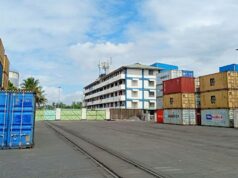
Rising agricultural production will only translate into stronger markets if Zambia can move larger volumes efficiently. With ambitious 2030 targets for maize, soya beans, sugar and wheat, expanding rail capacity is becoming a critical part of the agribusiness growth equation, shaping how efficiently commodities reach processors, regional markets and export ports.
Finance and National Planning Minister Situmbeko Musokotwane has linked the government’s rail programme to rising production across agriculture and mining, arguing that roads alone will not accommodate the expected freight volumes. The government is targeting 10 million tonnes of maize, three million tonnes of soya beans, three million tonnes of copper, one million tonnes of sugar and one million tonnes of wheat by 2030, alongside higher beef production.
The implications for agribusiness extend beyond transport. Greater freight capacity could reduce bottlenecks between production areas, storage and processing facilities, while improving access to domestic, regional and international markets. Zambia Railways currently handles only a small share of the country’s bulk freight. It moved 804,214 tonnes in 2023, equivalent to about 4% of an estimated 21 million tonnes of bulk cargo. Poor track conditions and limited capacity have constrained its market share.
Under its 2024–2028 strategic business plan, Zambia Railways aims to increase annual freight volumes to 2.6 million tonnes by the end of 2028. TAZARA provides another potential route. Its rehabilitation and modernisation will strengthen Zambia’s connection to the port of Dar es Salaam, with an inland port planned at Kapiri Mposhi. On 29 September 2025, TAZARA signed a public-private partnership concession with China Civil Engineering Construction Corporation for an investment exceeding US$1.4 billion, including infrastructure rehabilitation and new locomotives and wagons.
The planned Lobito Railway could add another international corridor, connecting Zambia and the Democratic Republic of Congo to Angola’s Lobito port. While mining is a major driver, expanded corridor capacity could create wider opportunities for commodity trade as logistics networks develop. The commercial test is straightforward. Higher yields only create greater value when producers can move their output reliably and competitively. Improved rail connectivity could support larger production catchments, strengthen investment in storage and processing, and make it more viable to move bulk commodities to distant markets. It could also support Zambia’s ambitions to increase manufactured exports by improving the movement of agricultural inputs, raw materials and processed products.
The scale of the production targets makes logistics an increasingly strategic part of the agribusiness equation. 10 million tonnes of maize and millions more tonnes of other commodities will require infrastructure capable of moving them beyond the farm gate. The opportunity, therefore, is not simply to build more railways. It is to connect Zambia’s expanding agricultural production with the markets capable of absorbing it. If track, locomotives, wagons and inland terminals come online at the required pace, rail could become an important piece of the infrastructure supporting Zambia’s next phase of agricultural market expansion.