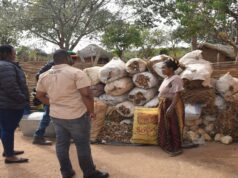
In the traditional narrative of criminal justice, correctional facilities are defined by containment thick concrete walls, high fences, and strict custodial oversight. But a growing movement across Southern Africa is radically rethinking what lies behind those gates. In Lusaka, regional leaders gathered to advance a bold vision: converting prisons into engines of agricultural output, vocational hubs, and incubators for human dignity.
Closing the 2026 SADC Officers-in-Charge Peer-to-Peer Interaction Workshop, Zambia’s Commissioner General of Correctional Services, Fredrick S.S. Chilukutu, urged institutional leaders across the Southern African Development Community (SADC) to abandon outdated punitive paradigms. Instead, he challenged them to build ecosystems centered on self-reliance, mental healthcare, and practical skill-building.
“A journey of a hundred hectares starts with a lima,” Chilukutu remarked, invoking the local unit of land measurement to emphasize that systemic transformation begins with small, deliberate actions. He called on Officers-in-Charge to aggressively leverage prison land for agricultural production, noting that every cultivated plot serves a dual purpose strengthening national food security while equipping inmates with commercial farming skills for life after incarceration.
The gathering, hosted by the Zambia Correctional Service under the theme ‘Transforming Correctional Systems for Sustainable Development: Promoting Agriculture, Rehabilitation, Economic Empowerment, and Community Resilience across the SADC Region,’ brought together 110 senior delegates from seven member nations, including Angola, Eswatini, Namibia, South Africa, Tanzania, and Zimbabwe. Throughout the sessions, administrators confronted shared regional hurdles, including tight budgets and the complex delicate balance between maintaining security and fostering genuine rehabilitation.
Central to the discussion was the belief that effective corrections must look beyond the immediate term of sentencing. Chilukutu stressed that technical trades, modern technology training, and mental health support are vital components in breaking cycles of reoffending and restoring self-worth.
“Meaningful rehabilitation cannot end at the prison gate,” Chilukutu emphasized. “It must equip inmates with knowledge, confidence, and practical capabilities to rebuild their lives and contribute positively to society.”
Delegates praised the host nation for creating a collaborative platform to exchange proven strategies and interrogate administrative bottlenecks. As the delegation departed, the overarching consensus was clear: when correctional facilities serve as pathways to empowerment rather than mere places of detention, they do more than reform individual lives they build safer, more resilient communities across the entire SADC region.