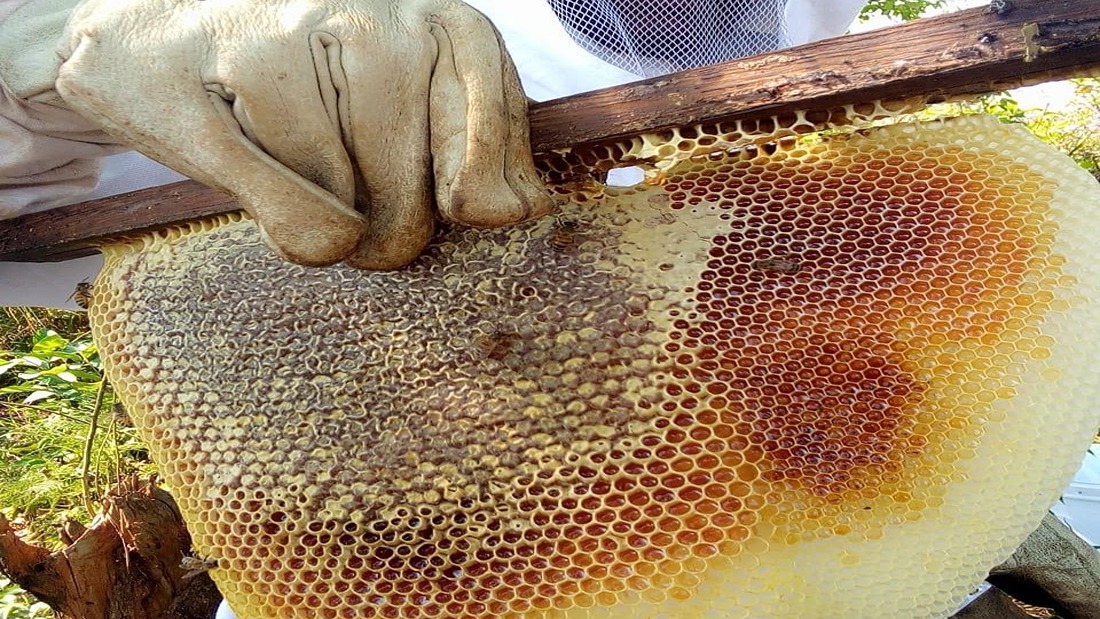
In Zambia’s rural Copperbelt region, beekeeper Paison Nkunkwilwa and his team suit up to collect honey from their box beehives, a new, eco-friendly approach that is transforming both livelihoods and landscapes.In the past, traditional beekeepers used destructive methods, cutting down trees to reach wild hives. Today, thanks to NGOs and local businesses introducing modern wooden beehives, honey is being harvested sustainably while forests are preserved.
The shift to sustainable beekeeping is providing rural families with an alternative to charcoal production and forest clearing for agriculture, two major causes of deforestation in Zambia. The honey is sold commercially, generating income while protecting ecosystems.According to a 2023 Bees for Development study, sustainable beekeeping encourages local communities to conserve forests. Bees depend on intact woodlands for pollination, meaning that when trees bring income, beekeepers become natural forest guardians.“Our parents made local traditional beehives and there were plenty of trees then. Now we’ve been encouraged to stop burning charcoal,” said Nkunkwilwa.
According to Global Forest Watch, deforestation remains a serious concern in Zambia, which has lost 11% of its tree cover between 2001 and 2024. Charcoal burning, agricultural expansion and timber harvesting continue to drive forest loss.Another Copperbelt beekeeper, Cabson Lilanda, has also embraced conservation. He received free modern beehives from Mama Buci, one of Zambia’s leading honey producers. The company has distributed around 120,000 hives since 2010 to about 10,000 beekeepers, paying them directly for their honey harvests.“We used to cut down trees to get honey. Now, by preserving trees, bees have more flowers and we get more honey. Conserving forests helps both us and the bees,” said Lilanda.
Beekeepers deliver their honey to Treetop Honey in Ndola, earning about $1 per kilogramme. Each hive produces around eight kilogrammes annually. Treetop Honey partners with Mama Buci to strengthen sustainable supply chains.Mama Buci founder Martin Zuch said beekeeping is helping turn the tide on forest loss: “When I first came here, forest cover was 67% of the country but now it’s down to about 60%. The more beehives we distribute and the more education we provide, the more people understand that making charcoal destroys their future.”
Ecologists say this growing movement is helping mitigate climate change, as protecting trees keeps carbon stored and ecosystems healthy.By turning beekeepers into forest guardians, Zambia is proving that local innovation can deliver global impact, one hive at a time.